
El Dorado County Arrest Log
The Sheriff's official blotter lives on the EDSO Citizen RIMS media-bulletin page. Pick a date. The daily report then lists selected Sheriff calls for service. Bulletins run from December 31, 2024 through September 6, 2026. Some dates are skipped. That span reflects current availability, not a guaranteed archive.
A bulletin may list "ARREST" as a call's disposition. Treat that as an incident record. It is not a name-based jail log. Booking numbers, bail, charges, and the arrested person's name rarely appear, since some events get withheld for investigative reasons. Use bulletins for incident context, then turn to the county roster, the Records Unit, or Superior Court for custody and case records.
The official El Dorado County media bulletin appears in this captured interface.
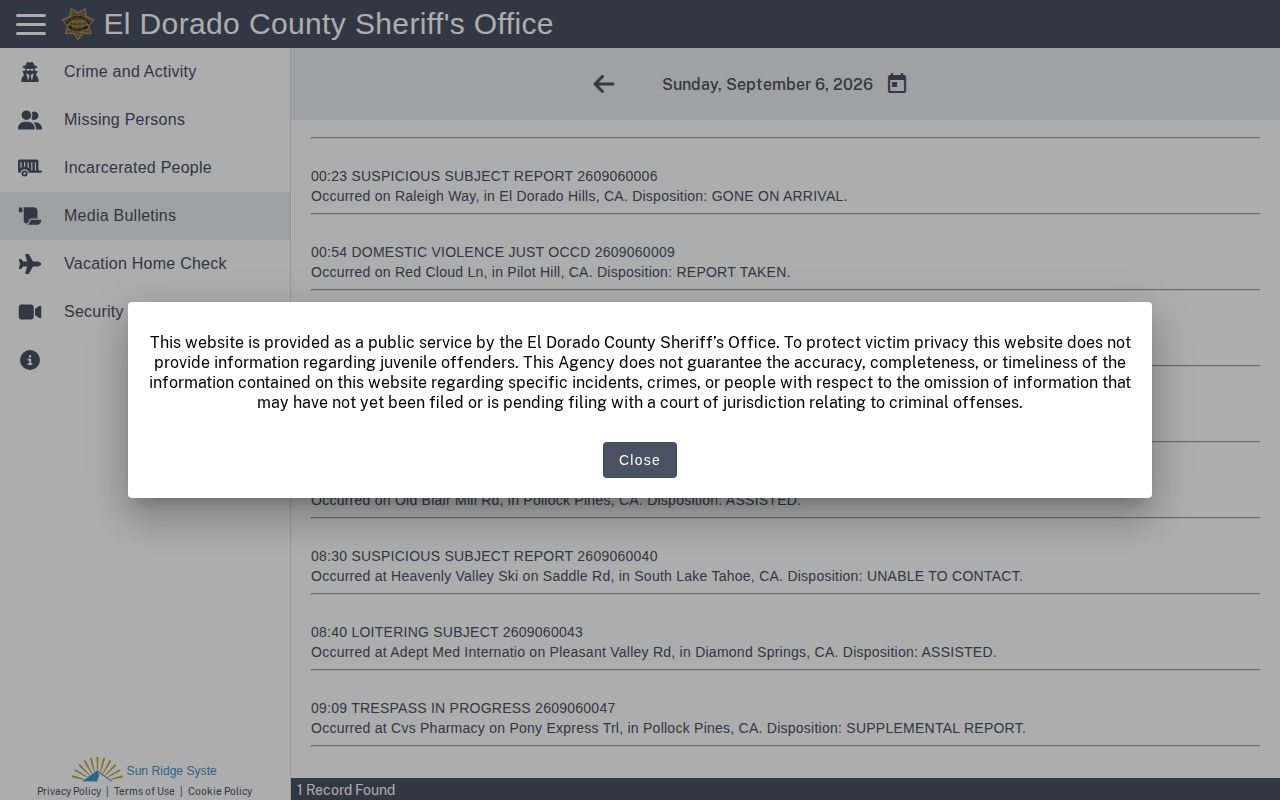
The date selector makes multi-day review easy. Scroll back through several dates at once. Each row still describes one call or incident. No row doubles as a custody record.
Read El Dorado Arrest Bulletins
Work backward by date. A weekend event may surface late in the report. So may an incident reported days after it happened. Hang onto the incident number, because it bridges directly to a later agency request.
- Open the official media-bulletin page and choose the date of interest.
- Scan the time, event type, town or location, and disposition.
- Note any row marked “ARREST,” plus its incident number and location.
- Use the current EDSO roster to check whether a named person remains in county custody.
- Ask EDSO Records for the underlying report when the bulletin lacks needed detail.
- Use Superior Court records for filed charges and the final disposition.
The 24 Hour Arrests route is narrower and custody-focused. It explains why EDSO's current roster works only as a same-day proxy. The arrest log answers a different question. It shows when and where a selected call was recorded across multiple dates.
El Dorado Arrest Entry Fields
Every bulletin field describes a call. Don't quietly turn those fields into booking facts. An officer-initiated marker shows how the contact began. It says nothing about the outcome on its own.
| Field | What it can establish |
|---|---|
| Time | The time attached to the listed call or event. |
| Call or event type | The initial public label, which may differ from a filed charge. |
| Incident number | The reference used when asking the agency for the report. |
| Occurred at or initiated | How or where the listed event was recorded. |
| Town or location | The public geographic description, sometimes limited. |
| Disposition | The listed result, which may include “ARREST.” |
| Name, bail, photo | Not consistently supplied by this bulletin system. |
A booking record is a different animal. It can carry name, booking number and date, arresting agency, arrest location, status, bail, and charges. That level of detail lives in jail records. EDSO's current roster is text only, since public inmate photos are disabled.
El Dorado Weekend Arrest Reports
EDSO says bulletins are generated daily, but no posting hour is guaranteed. The date list includes long runs of consecutive days along with gaps. A busy weekend can pack more calls into one report, yet nothing supports the claim that weekends always bring more arrests. Count only the entries that fit your question.
Holiday posting habits go unlisted. If a date is missing, try again later. Check the days on each side. A missing bulletin proves nothing. Save the date, URL, incident number, town, and disposition while they're visible, then request the source report when detail or permanence matters.
Note: A bulletin posting can lag an event, and its “ARREST” label does not prove that the person remains jailed.
Placerville Arrest Log Changed
Placerville traded its weekly crime-log program for Citizen RIMS on March 31, 2025. The official Placerville crime-log page explains the switch. The city interface now bundles several public-safety tools. It covers crime mapping, agency arrests, daily bulletins, stolen-vehicle data, missing-person information, and more.
This city system doesn't replace the EDSO custody roster. A Placerville Police arrest can move into county custody. There, the Sheriff roster lists Placerville Police as the arresting agency. The city incident entry, county booking row, and court file stay separate. Each updates on its own schedule.
The Placerville Citizen RIMS interface shows the city's public-safety tools.
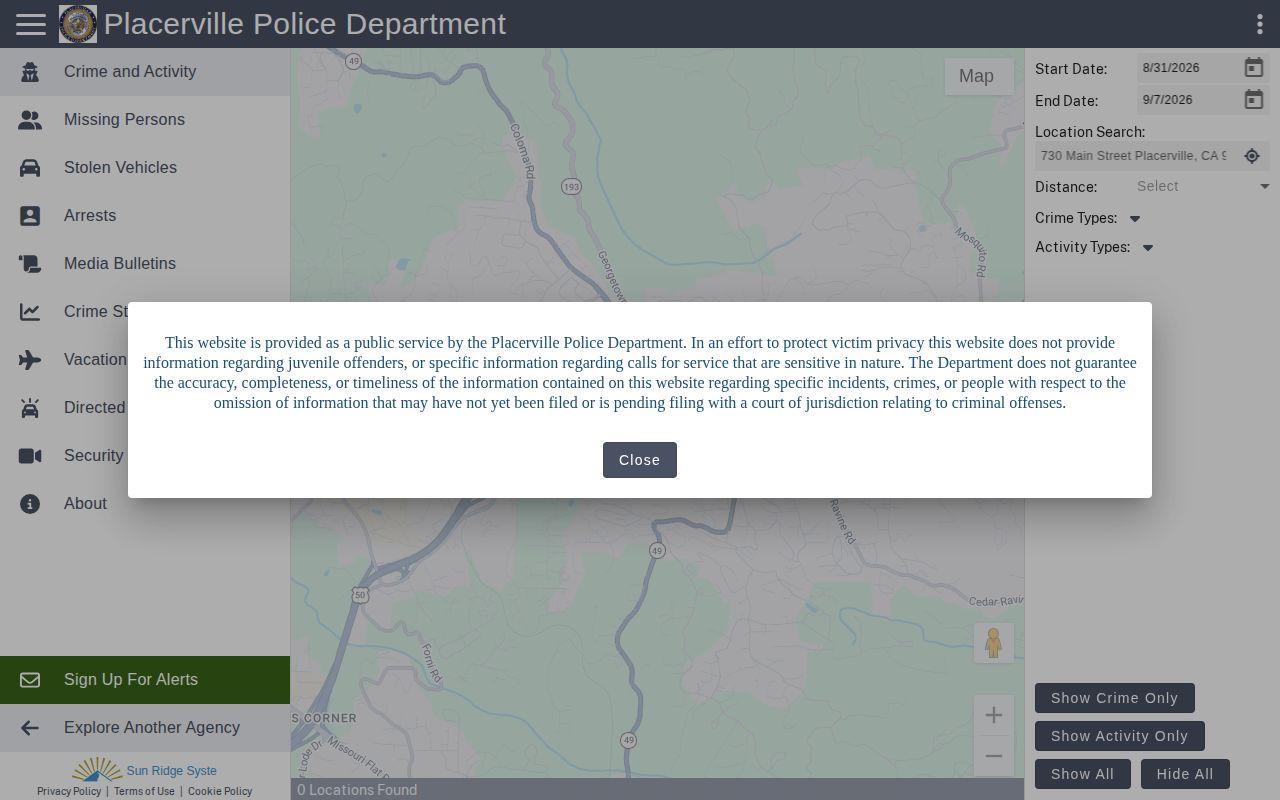
This local channel explains city incidents, while EDSO remains the county custody source.
El Dorado Arrest Log Archives
Citizen RIMS configuration says historical bulletins are not kept, whatever the visible range suggests. Treat public dates as current availability, not a retention promise. When an older date vanishes, call EDSO Records. Public-record requests go in person, by fax, or by mail, and the office allows ten working days to respond. Report copies cost $0.25 per page.
For older bookings, a subject-only local CORI covers ten years of El Dorado County Jail booking and release dates, arresting agency, and charges. It costs $25 and requires identification. It is not a public name-search archive. A local arrest or citation clearance letter runs $30. Court records follow a different schedule and fees.
The El Dorado Superior Court web index covers some post-2000 cases even without a case number, though current filings may lag. The court cannot hand over police reports or warrants. Ask the originating agency for those. Use the court for charging documents, calendars, pleas, dismissals, and judgments.
El Dorado News Arrest Blotters
Start with the agency record. News works better as a second layer. Get a bulletin or booking entry in hand first. Then El Dorado reporting can add the story around the arrest. Placerville NewsWire / INEDC runs county arrest-blotter pieces built from booking-style fields. The Mountain Democrat covers selected crime and court stories from El Dorado County. The Tahoe Daily Tribune handles major South Lake Tahoe and regional enforcement news.
Remember what these outlets are. They publish news, not custody records. A story may lag, skip most arrests, or stay silent after a case shifts. One INEDC El Dorado County arrest-blotter example shows the format. Every detail still belongs back with the official entry.
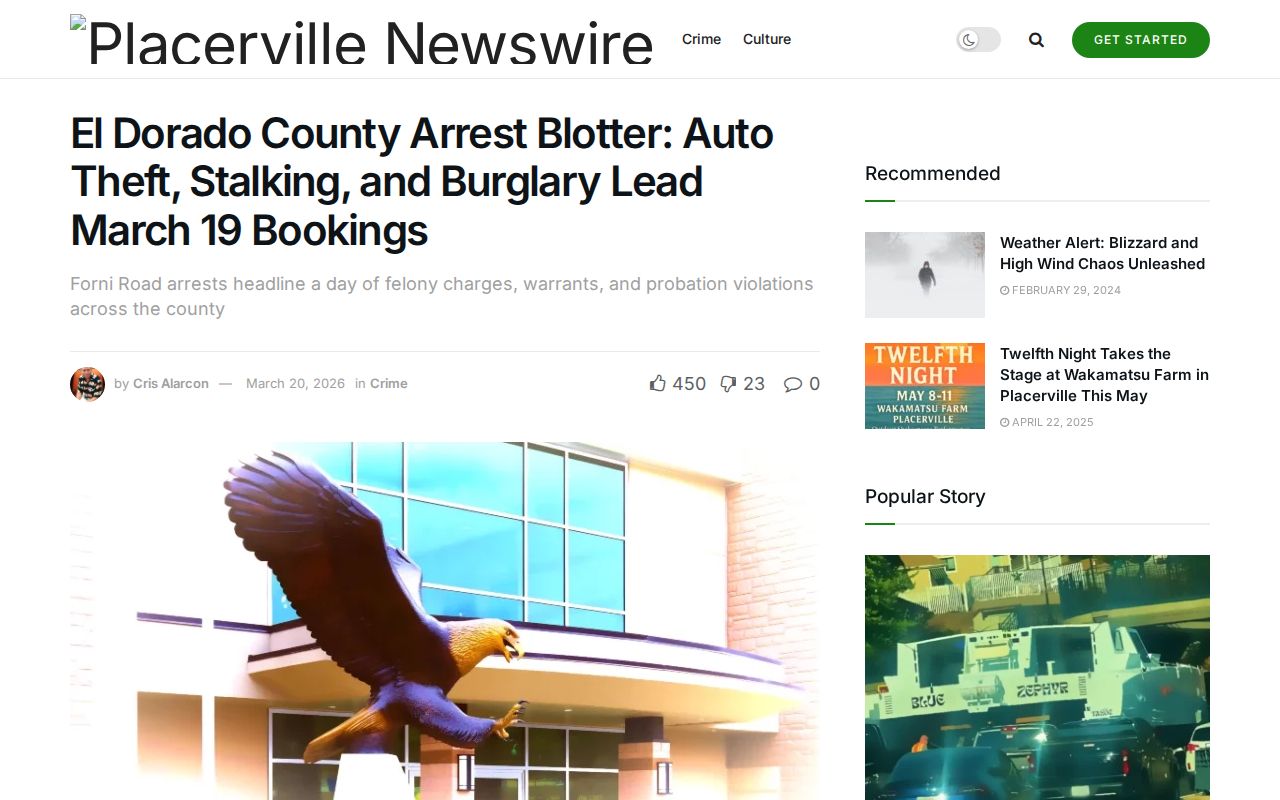
A news story can point you toward a name. It is still just a lead. For who is actually in custody, the Sheriff's word stands. Courts hold the final say.
Unofficial El Dorado Incident Archives
Two unofficial archives sit outside the official system. SpotCrime keeps a daily El Dorado County incident archive. Local Crime News maintains a page for the EDSO agency feed. Neither one speaks for the county. When the public bulletin window closes, these pages can hint at a date, a place, or the agency behind an arrest. They cannot confirm who is in custody right now. Commercial data ages badly, and city labels often blur into unincorporated parts of El Dorado County. Skip any search form that asks for sensitive details, and check each lead with EDSO, Placerville Police, South Lake Tahoe Police, or the court.
El Dorado Arrests Need Context
A single bulletin captures a single moment. Cases move. Charges can be amended, reduced, dismissed, diverted, or rejected as an El Dorado case works forward. Arraignment is the first court appearance. Disposition is the final result. No bulletin or news story carries that full arc, so confirm custody with EDSO, the incident report with the arresting agency, and the outcome with Superior Court.
Public Record Search
Sponsored Results